
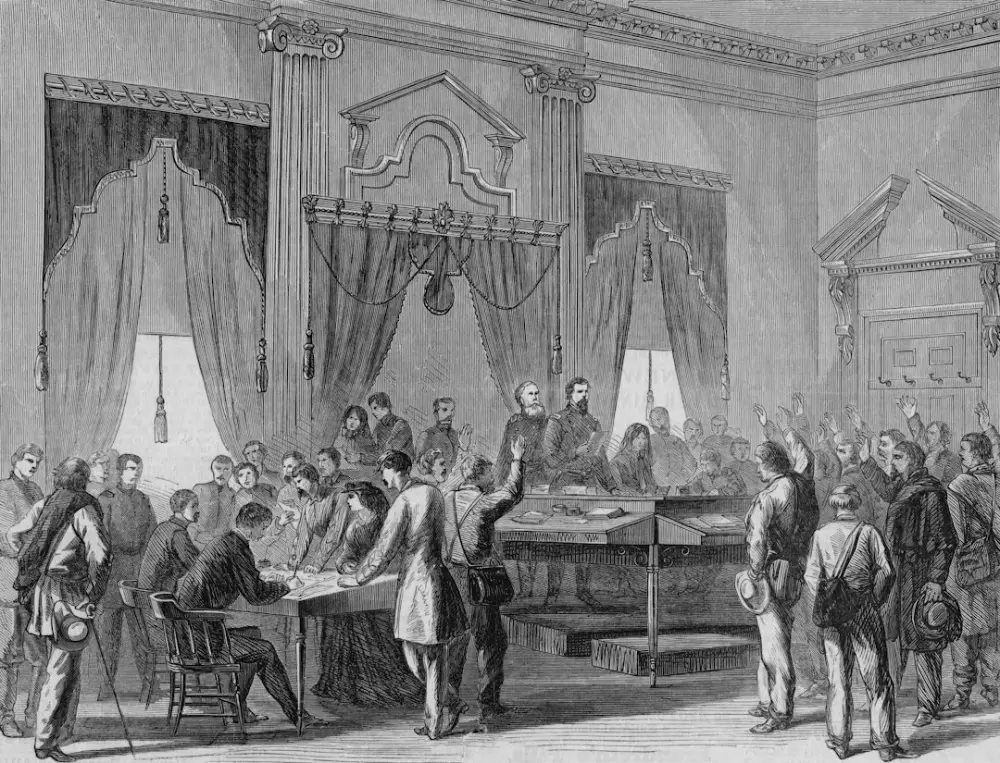
Citizen representation is the mechanism by which individuals or groups act on behalf of the public within a political system. It ensures that diverse community interests and values influence government decisions. This is primarily achieved through electoral systems, though it also includes participatory methods like citizens' assemblies and public consultations. To see how elected voices turn into law, read the legislative process; for the agencies that carry it out, see public institutions in governance.
In 2026, understanding these mechanisms is essential for navigating how local and national policies are formed. Whether through a direct vote or a deliberative panel, representation determines who holds the floor during budget allocations and law-making sessions. It bridges the gap between individual needs and collective institutional action. The concept of representation rests on the relations…
Comparing Majoritarian and Proportional Systems
Electoral systems are the technical frameworks that translate votes into seats. The two most common types—majoritarian and proportional—produce very different legislative environments. In a majoritarian system, such as First-Past-The-Post (FPTP) used in the United Kingdom or the United States, the candidate with the most votes in a specific district wins the seat. This often leads to a two-party system and stable, single-party governments, but it can leave large numbers of voters feeling unrepresented if their preferred candidate loses.
Proportional Representation (PR) systems, common across much of Europe, aim to match the percentage of seats held by a party to the percentage of the total vote they received. For instance, if a party earns 15% of the national vote, they should ideally hold roughly 15% of the seats in the legislature. This system encourages a multi-party environment and necessitates coalition-building. Understanding these differences is vital when tracking the legislative process explained: from proposal to final implementation, as coalitions require more negotiation before a bill can move forward.
Mixed systems also exist, such as the Mixed-Member Proportional (MMP) system used in Germany and New Zealand. In this scenario, citizens often have two votes: one for a local representative and one for a political party. This attempts to balance the local accountability of majoritarian systems with the fairness of proportional systems. Each system influences how citizens interact with their government and how much leverage an individual voter has over the final makeup of the administration.
Global Impact: Regions Where We Work
The application of representative theory varies significantly by region, often dictated by historical precedents and institutional reforms. In Northern Europe, the emphasis is frequently on consensus-based politics. Here, the governance model relies on wide-reaching consultations with labor unions, industry leaders, and civil society before legislation is even drafted. This ensures that the resulting laws have broad public buy-in, reducing friction during the implementation phase.
In contrast, many federal systems, such as those in Australia or Canada, manage representation across vast geographic distances. This requires a clear division of powers between local, provincial, and national governments. In these regions, citizen representation is often strongest at the municipal level, where residents have direct access to officials regarding local infrastructure, zoning, and public services. Observing how these different layers of government interact provides a practical look at institutional continuity.
Emerging democracies often experiment with innovative representation models to build trust. For example, several regions in South South America have pioneered participatory budgeting. This allows citizens to vote directly on how a portion of the municipal budget is spent, moving beyond traditional representative models into direct fiscal oversight. These regional variations show that representation is not a static concept but a flexible tool adapted to cultural and geographic needs.
Recent News and Success Stories in Democracy
As of late 2026, several jurisdictions have successfully integrated citizens' assemblies into their permanent legislative frameworks. These assemblies consist of randomly selected citizens who are briefed by experts to deliberate on complex policy issues. In Ireland, this model was famously used to break political deadlocks on constitutional issues, providing a clear mandate for the legislature to act. This approach reduces the impact of partisan polarization by focusing on evidence-based discussion.
Another success story comes from the expansion of digital transparency tools. In several Baltic states, the use of blockchain-verified voting and public digital dashboards allows citizens to track the progress of every representative’s vote in real-time. This level of granular data ensures that representatives remain accountable to their campaign promises. When citizens can see exactly how their interests are being defended, institutional trust tends to rise.
Furthermore, the 2026 local elections in various jurisdictions saw a marked increase in "youth councils" with statutory powers. These bodies are not merely advisory; they have the authority to trigger reviews of certain policies affecting younger demographics. By giving younger citizens a formal seat at the table, these institutions are ensuring that long-term planning, particularly regarding climate and education, is influenced by those who will live with the consequences of today's decisions.
Career Opportunities in Civic Advocacy
For those interested in the mechanics of governance, the field of civic advocacy offers diverse career paths. Policy analysts work within think tanks or government agencies to evaluate how proposed changes in electoral law will impact representation. They use statistical modeling to predict how redistricting or changes in voting thresholds might alter the political balance of a region. This role requires a deep understanding of both constitutional law and data science.
Electoral observers and administrators represent another critical sector. These professionals ensure that the rules of representation are followed to the letter. Working for organizations like the OSCE or local electoral commissions, they manage the logistics of polling stations, verify voter rolls, and monitor the counting process to prevent fraud. Their work is the technical backbone that allows the theory of representation to function in practice.
Community organizers and public affairs consultants bridge the gap between the public and the halls of power. These roles involve translating complex legislative language into actionable information for the public. By organizing town halls and managing public consultation phases, they ensure that the "citizen" part of citizen representation remains active and informed. These careers are essential for anyone looking to improve the health of institutional governance from the ground up.
How to begin advocating for better representation
- Start by identifying the specific electoral system used in your municipality—whether majoritarian, proportional, or mixed—to understand how your vote influences local seat distribution.
- The first step to active participation is reviewing how public institutions in governance manage local data and transparency, ensuring you know where to find official records.
- To begin influencing policy outcomes, track a specific bill through the legislative process and identify the exact committee stage where public testimony is accepted.
- Next, subscribe to the official newsletters of your local representatives to monitor their voting alignment with community interests.
- Finally, join a local civic advocacy group to collaborate on formal proposals that improve the accessibility of public consultations.
Archive: Accessing Past Civic Updates
Maintaining an accurate record of how representation has evolved is a core part of political literacy. Accessing archives of past legislative sessions, voting records, and committee transcripts allows citizens to see the long-term trajectory of public policy. Most modern governments now provide digital repositories where these documents can be searched by date, representative, or topic. Reviewing these archives helps clarify why certain laws exist and how previous generations of representatives handled similar challenges.
For those looking to deepen their understanding of these processes, Borgerlisten provides a structured approach to political literacy. By stripping away the rhetoric and focusing on the actual mechanisms of governance—from how electoral systems are structured to how public institutions function—we aim to provide a clear-eyed view of the state. Understanding citizen representation is not just about knowing who to vote for; it is about knowing how the system works so you can effectively engage with it. Through the resources at Borgerlisten, readers can move from being passive observers to informed participants in the institutional life of their community.